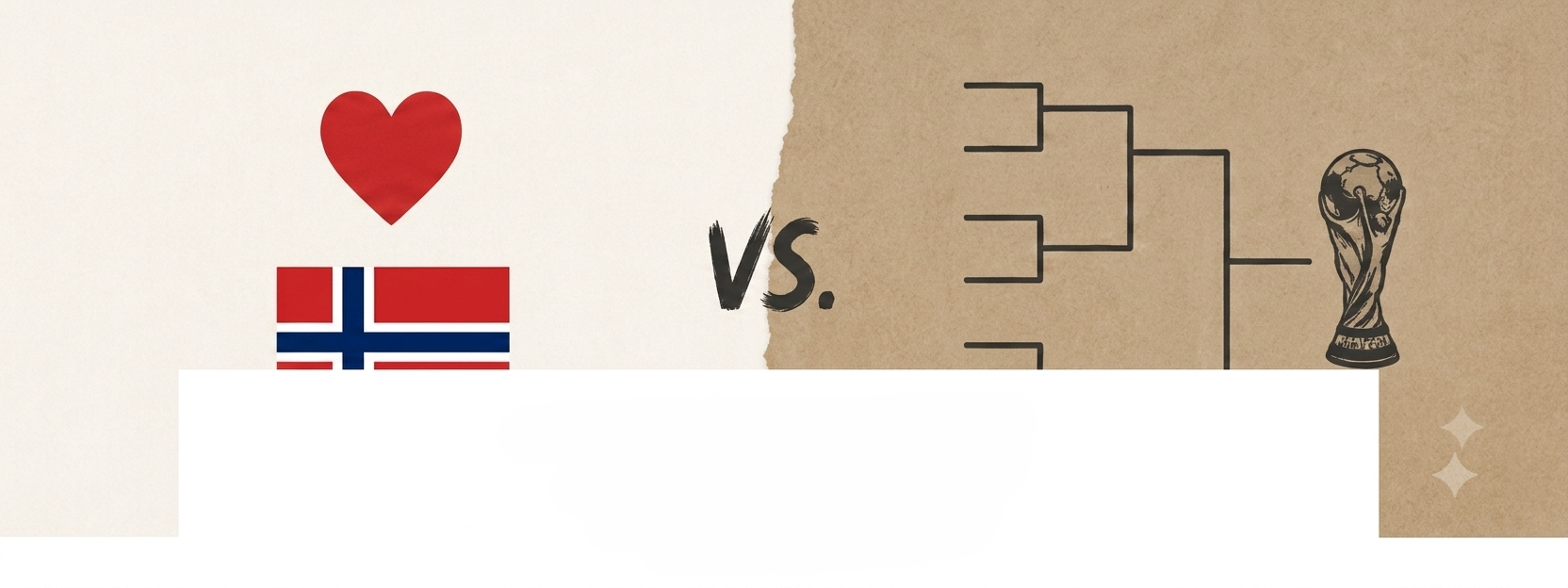
I’m a huge Erling Haaland fan. So with Norway playing in the World Cup, I obviously want them to win. I want to see Haaland score and keep their run alive.
But when I filled out my bracket, I deliberately predicted Norway would lose before the quarterfinals.
On the surface, it doesn’t make much sense. Why bet against the team you’re rooting for?
But as the tournament goes on, I realize something. I wasn’t really trying to predict the outcome. I was hedging my emotions.
If Norway won, I’d be happy as a fan. If they lost, at least my bracket would do better. Either way, I wasn’t fully exposed to disappointment.
We usually think of hedging as a financial idea. Investors diversify. Companies buy insurance. The goal isn’t to maximize upside, but to reduce downside.
But we do something similar all the time.
Think about how often we build backup plans into everyday decisions. We apply to a dream school and a few safer ones. We interview with multiple companies. We keep a stable job while exploring a side project. We leave early for the airport in case traffic is bad. We save extra copies of important files. Different situations, same pattern: reducing the downside of uncertainty.
Maybe these aren’t just practical choices. Maybe they’re emotional hedges. Instead of committing fully to one outcome, we quietly make sure no outcome feels too bad.
It makes you wonder: how many of our decisions are actually about predicting the future? And how many are just about making sure we’re okay no matter what happens?
Maybe finance didn’t invent hedging. Maybe it just gave a name to something we were already doing.